DOTWORK TATTOOS
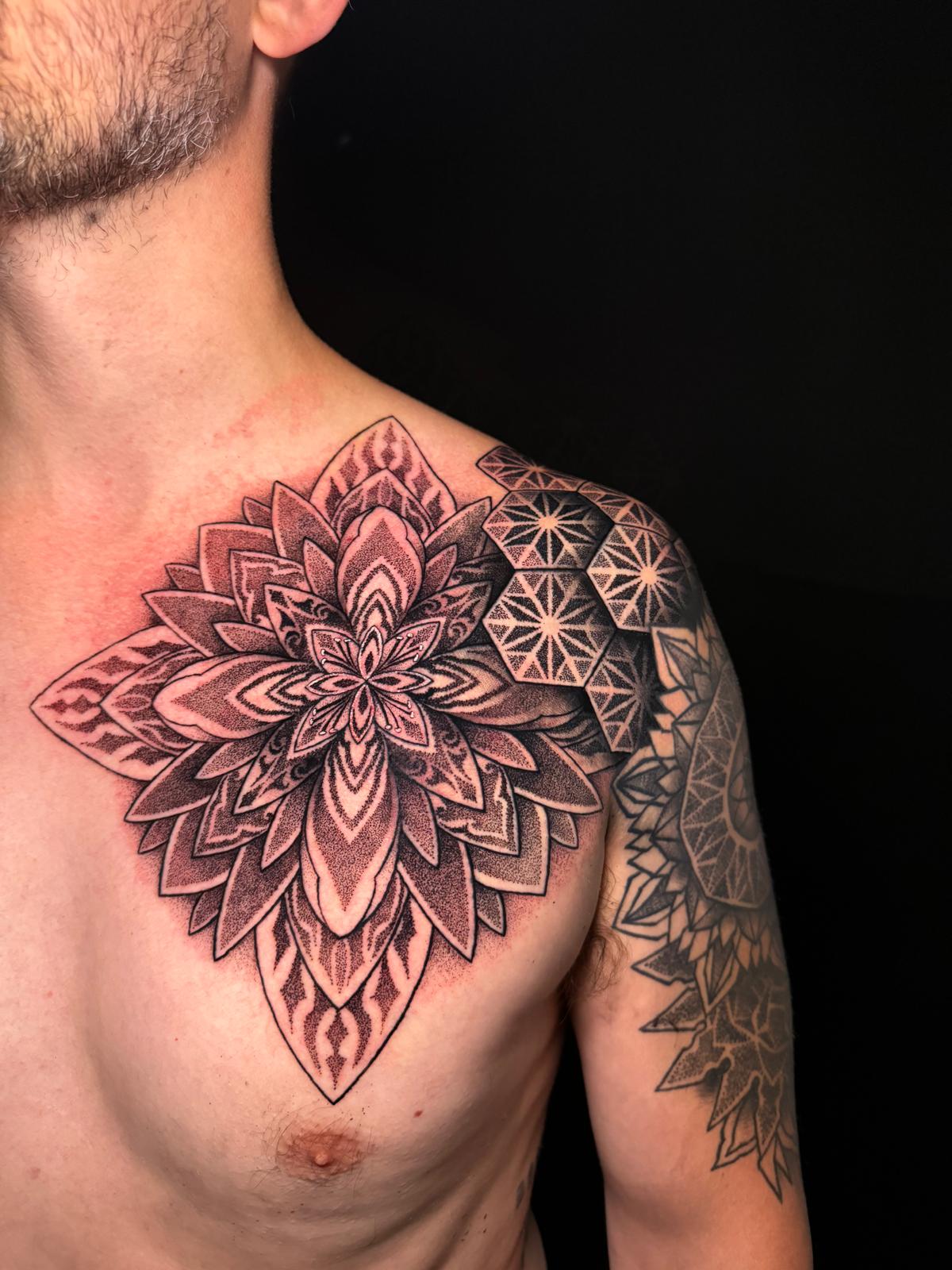
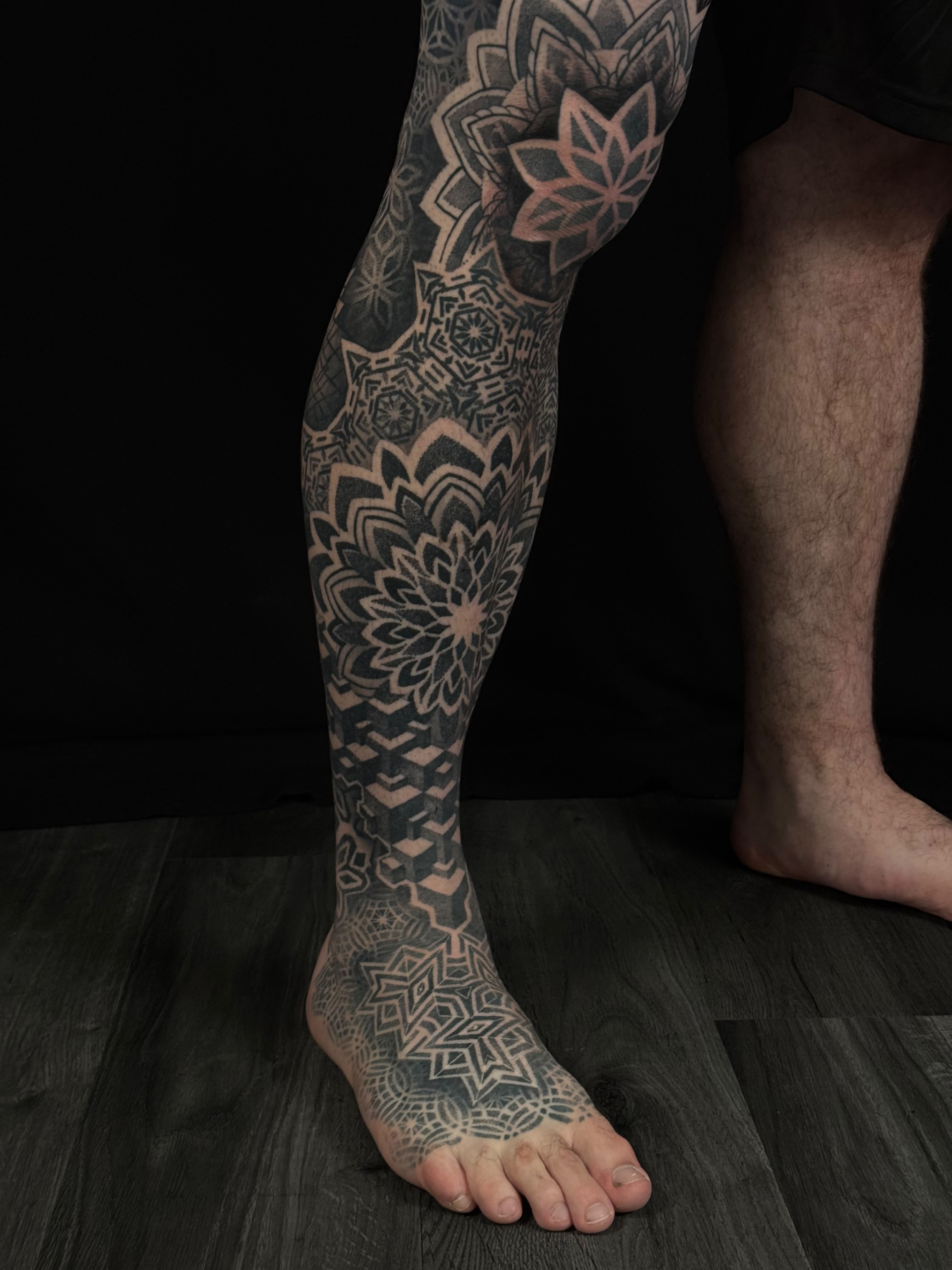
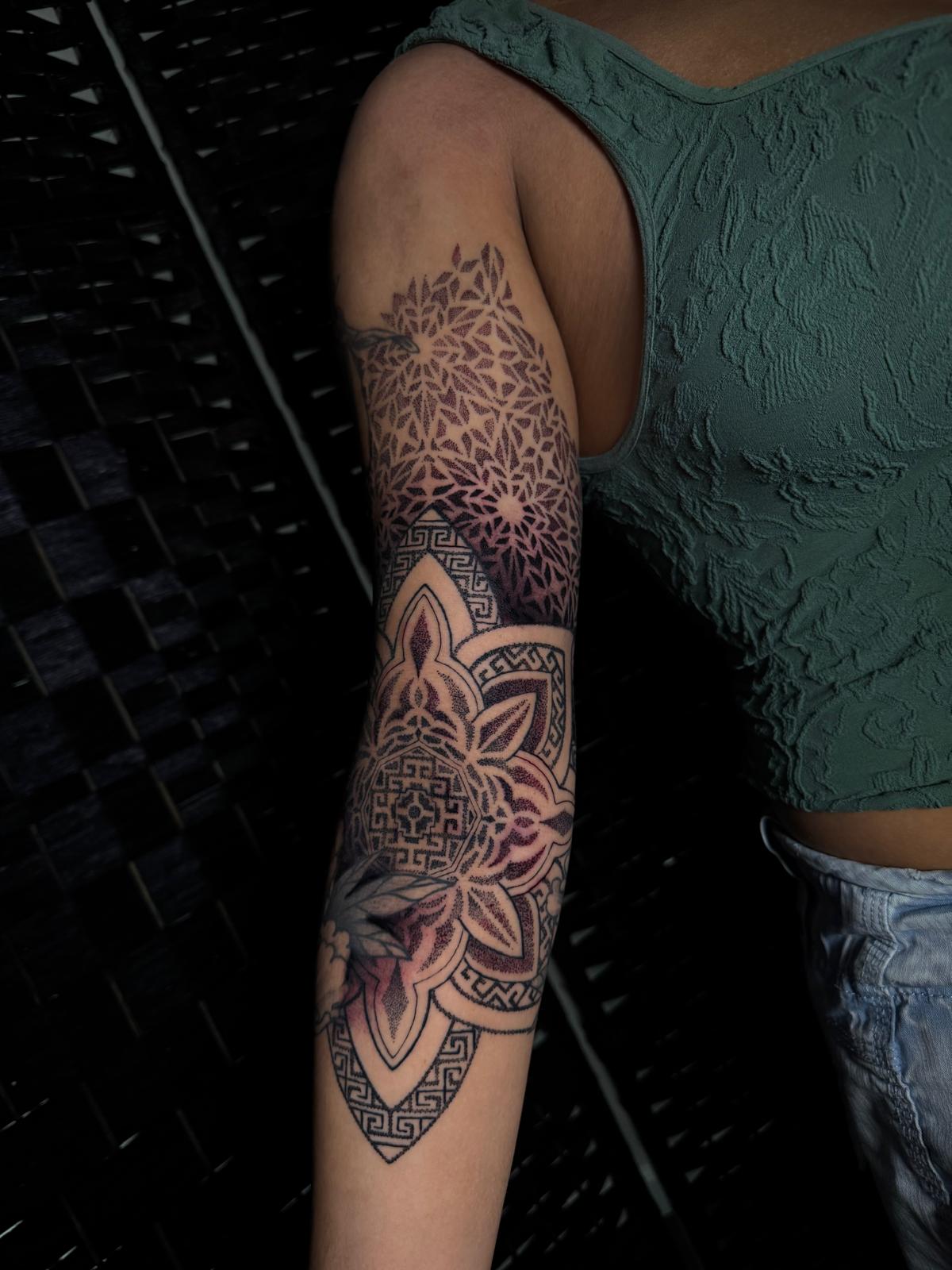
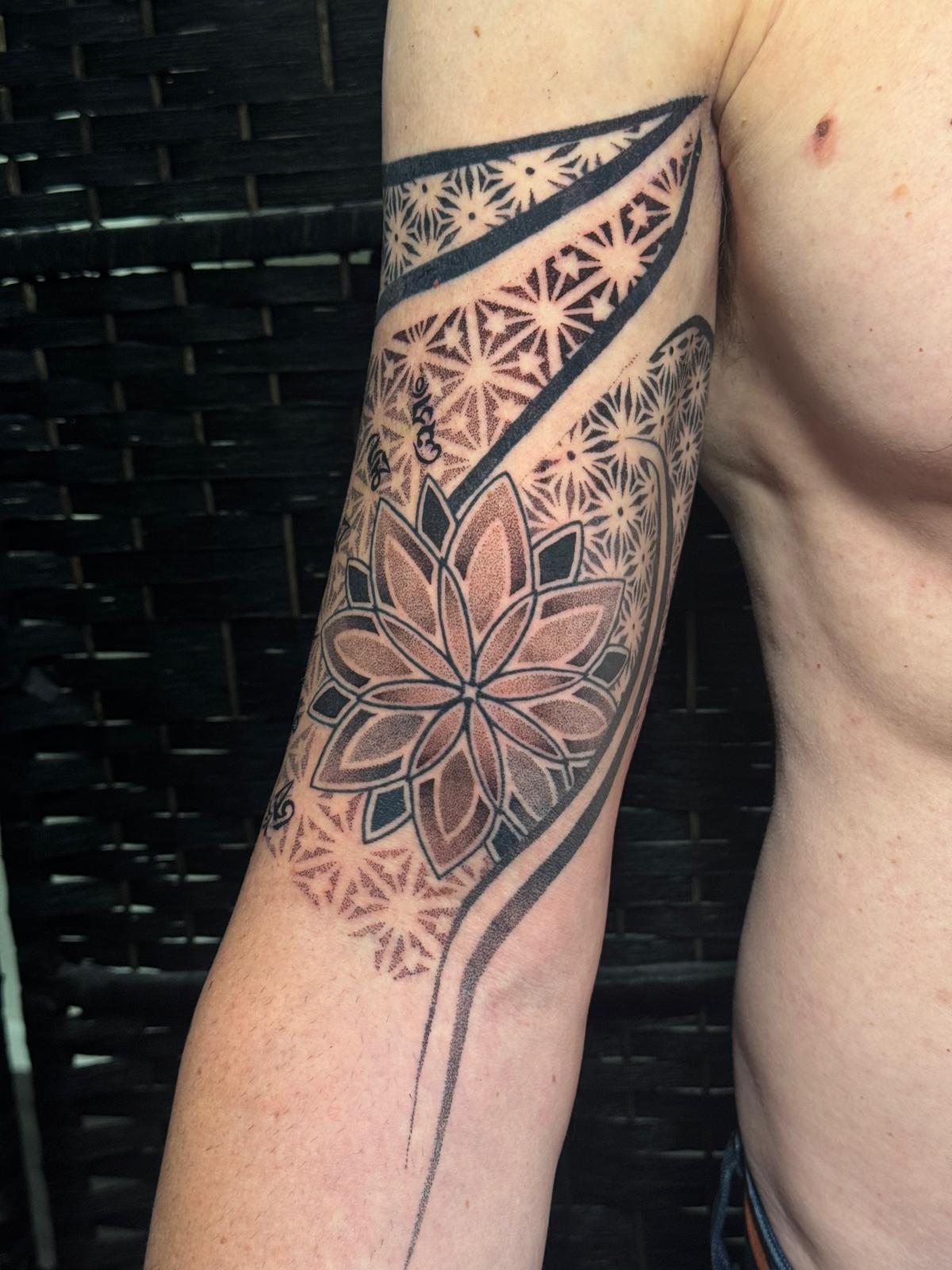
**Why dotwork takes as long as it does.** A shaded area in traditional tattooing is built with the machine moving continuously. In dotwork, every point of tone is a separate placement. A palm-sized area of mid-tone gradient can be tens of thousands of dots. That's the cost, and the gradient you get in return is softer than solid shading can produce — it fades to nothing at the edge instead of stopping.
**How it ages.** Dense dotwork holds up well because the structure is in the pattern, not in a fragile outline. Individual dots soften slightly over years, which reads as the gradient smoothing rather than the piece breaking down. Very fine, widely spaced stippling on high-friction placements — hands, feet, inner wrist — is the exception, and I'll say so before we start rather than after.
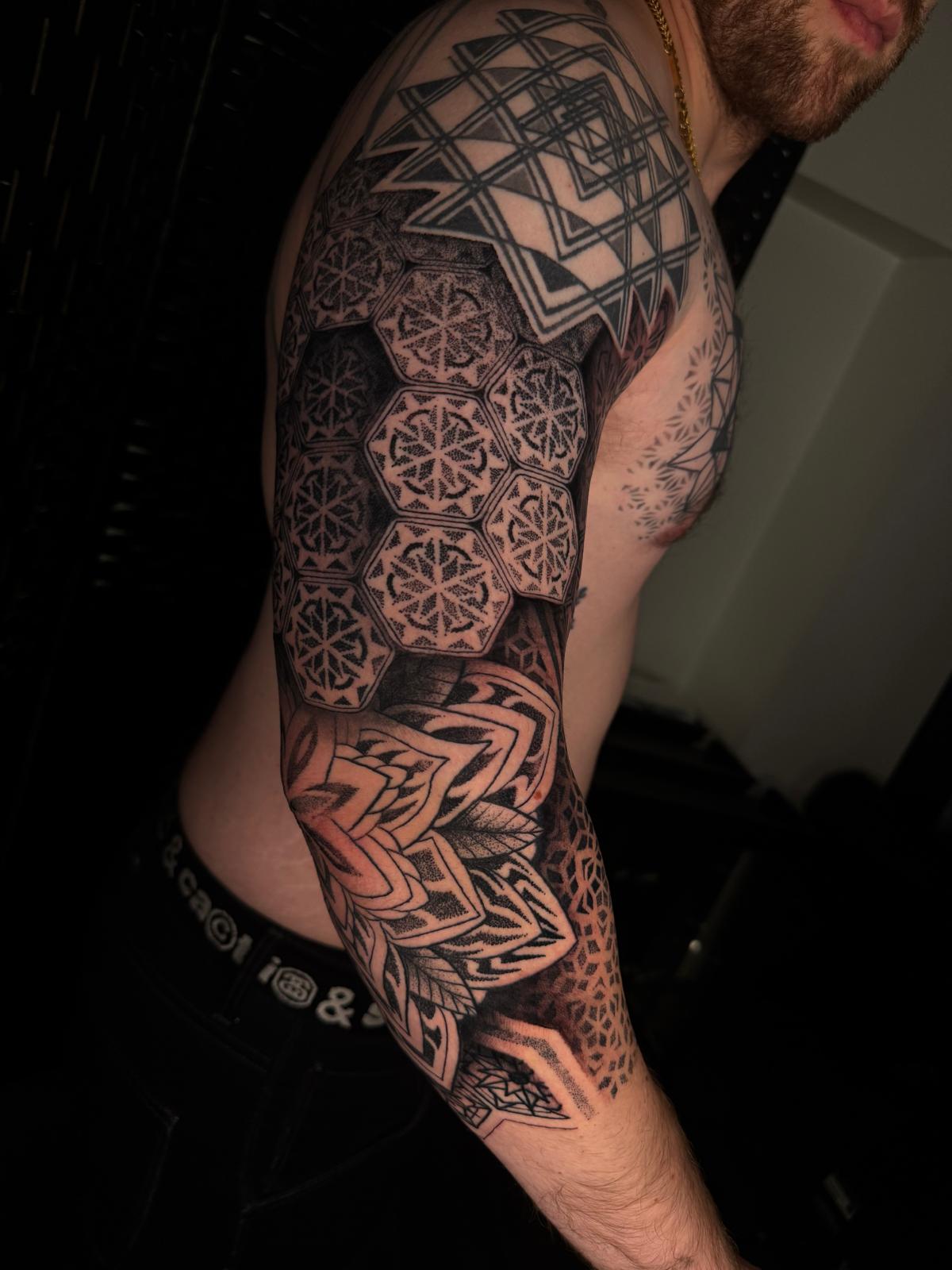
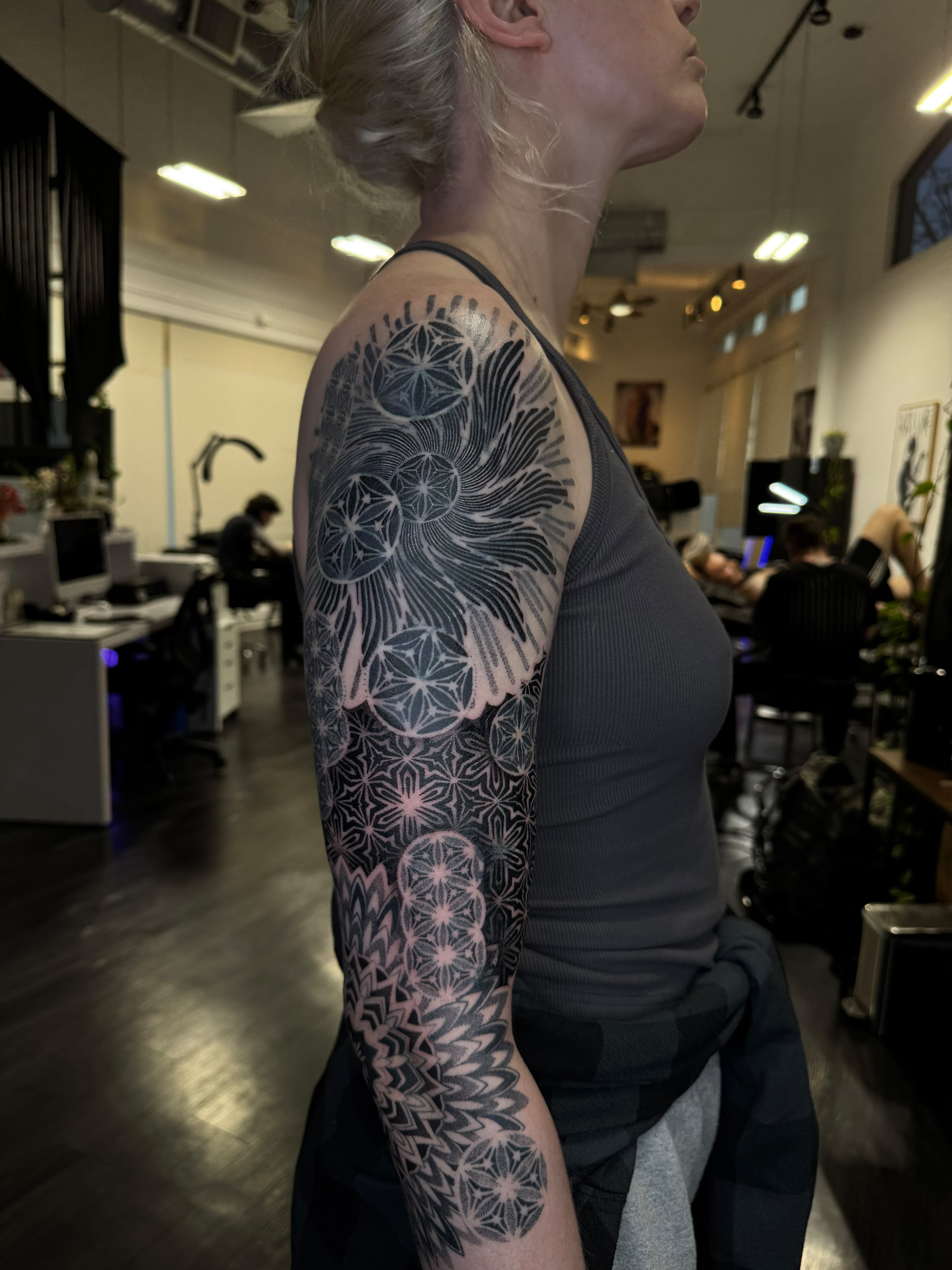
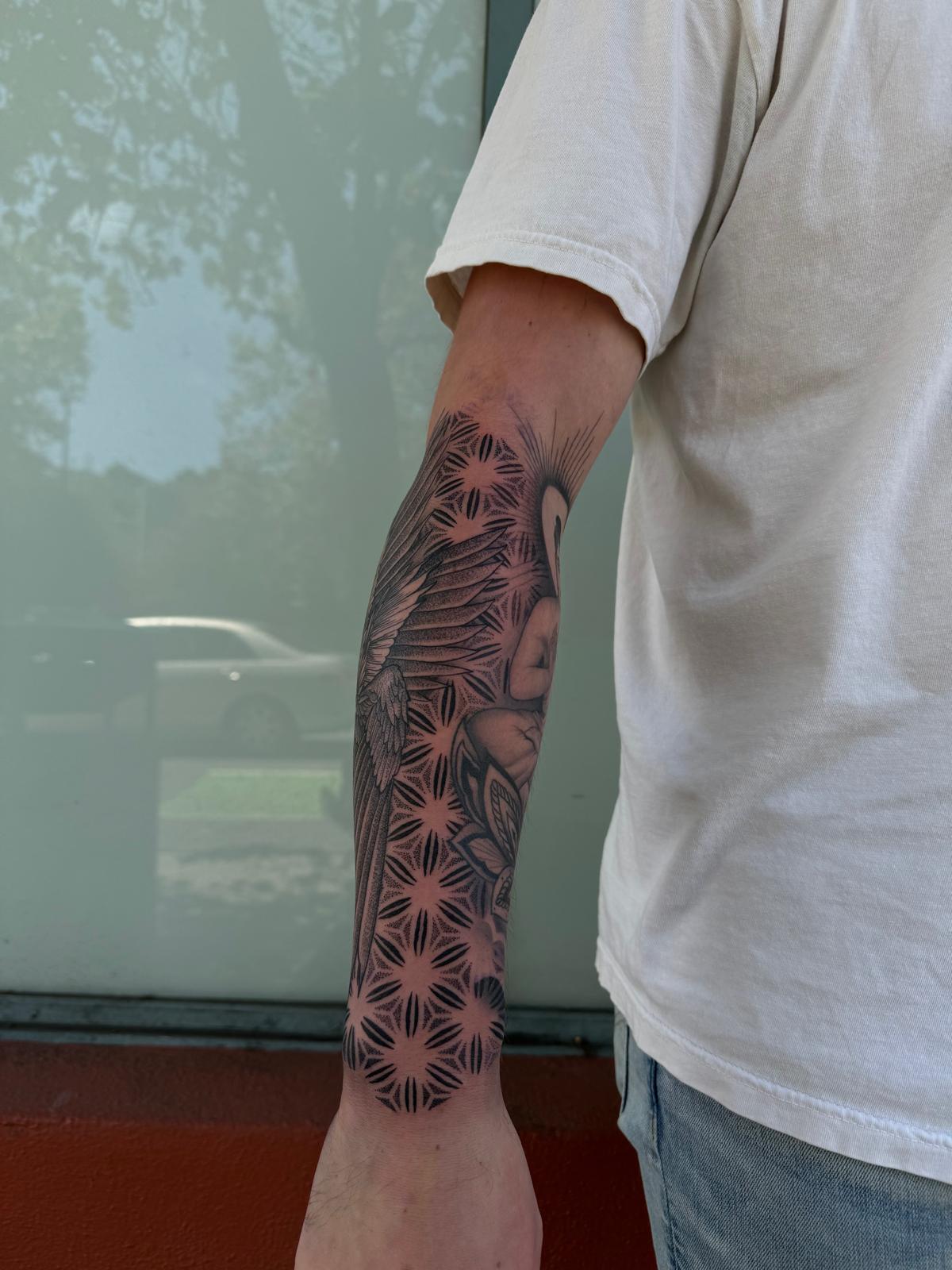
**Planning a full sleeve.** A dotwork sleeve is 5 to 10 sessions across 5 to 12 months. That's not a scheduling preference, it's the technique. Sessions run 3 to 6 hours; longer than that and precision drops, which on this kind of work shows.
WHAT TO EXPECT
01
DOTWORK IS A HIGHLY DENSE TECHNIQUE. EACH PIECE IS BUILT FROM HUNDREDS OF THOUSANDS OF INDIVIDUALLY-PLACED DOTS, NOT SOLID LINEWORK. THIS REQUIRES EXTENSIVE TIME TO EXECUTE.
02
SESSIONS ARE EXTENSIVE. MOST DOTWORK SLEEVE PROJECTS REQUIRE 5 TO 10 SESSIONS, SPANNING 5 TO 12 MONTHS OF CONSISTENT WORK. EACH SESSION IS BUILT FOR PRECISION AND DENSITY.
03
I work in a slow, meditative way. I place every single dot with extreme care to give you the soft gradients and complex geometry that make your piece truly unique.
04
EVERY SESSION IS A COMMITMENT. YOU WILL NEED TO BE PREPARED FOR A SIGNIFICANT TIME COMMITMENT OVER SEVERAL MONTHS TO COMPLETE YOUR SLEEVE PROJECT.
DOTWORK & SACRED GEOMETRY
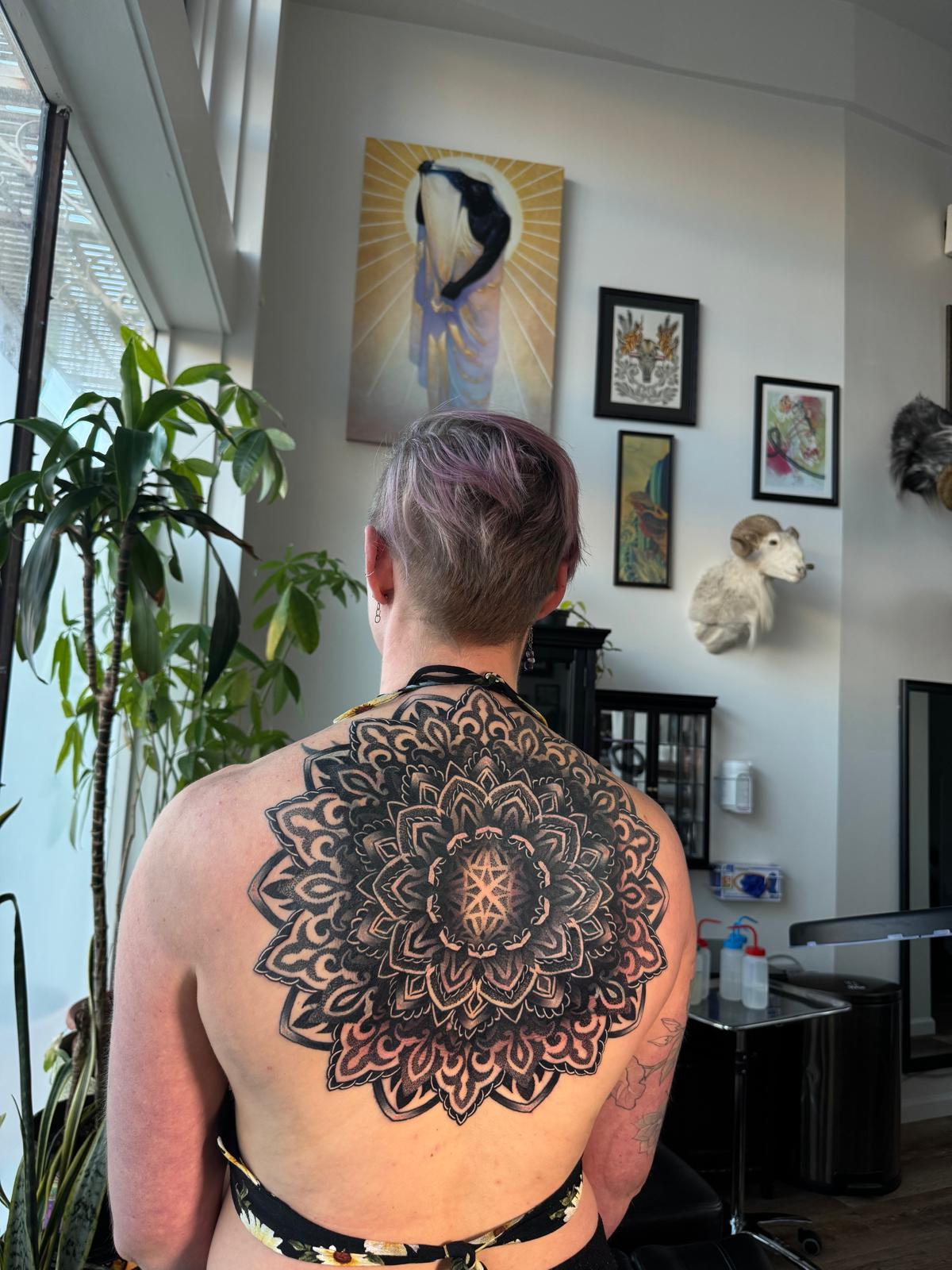
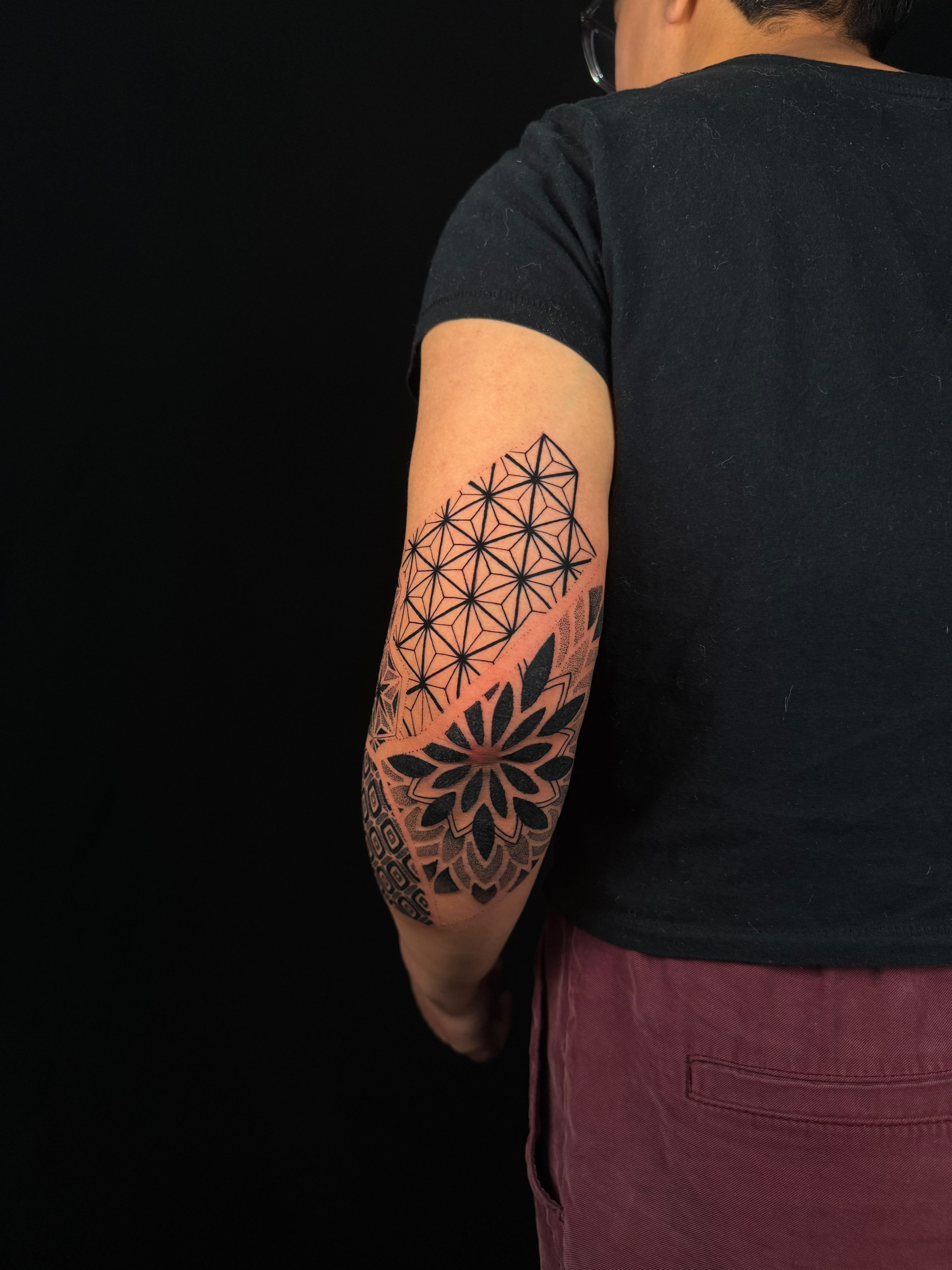
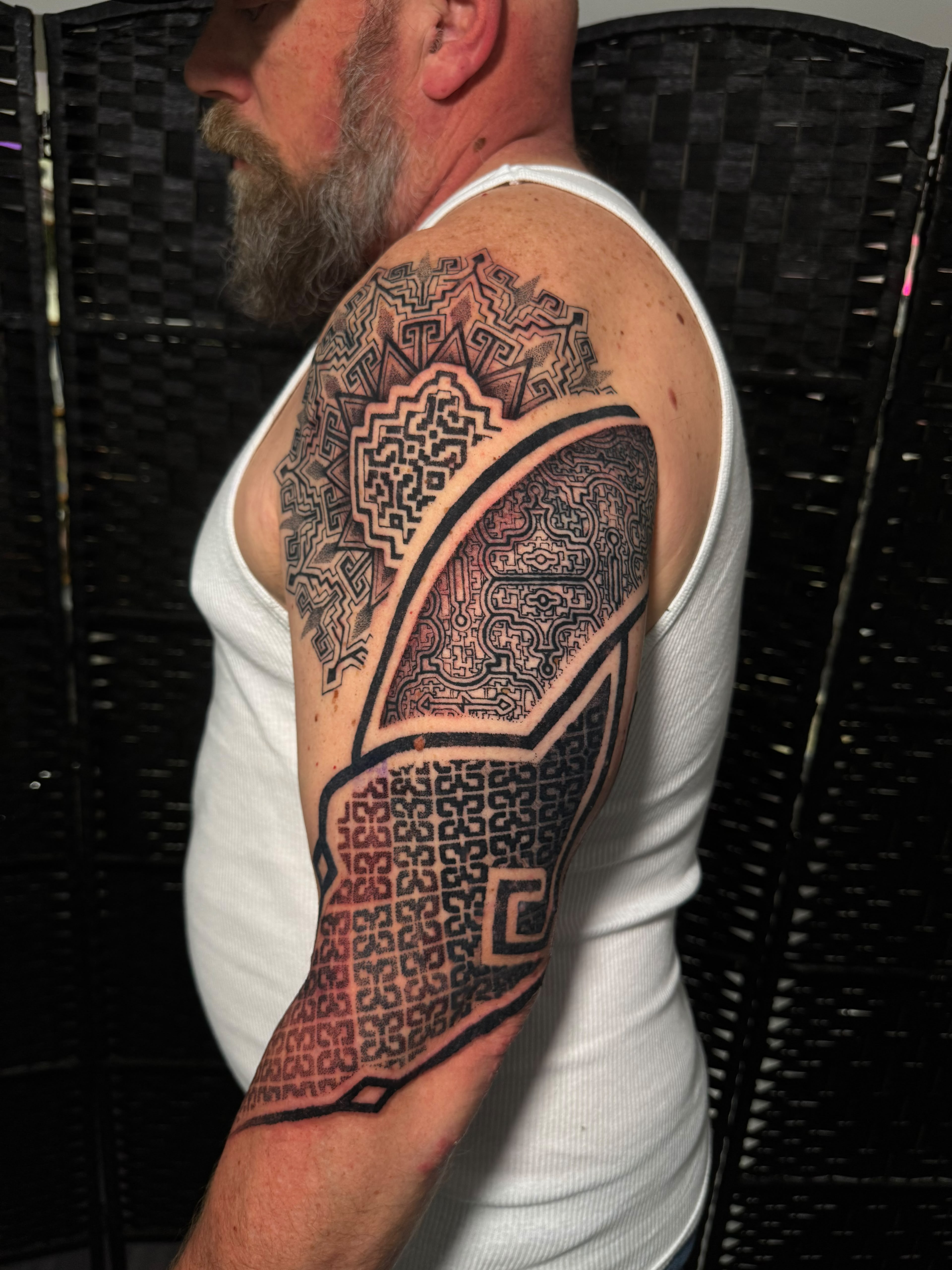
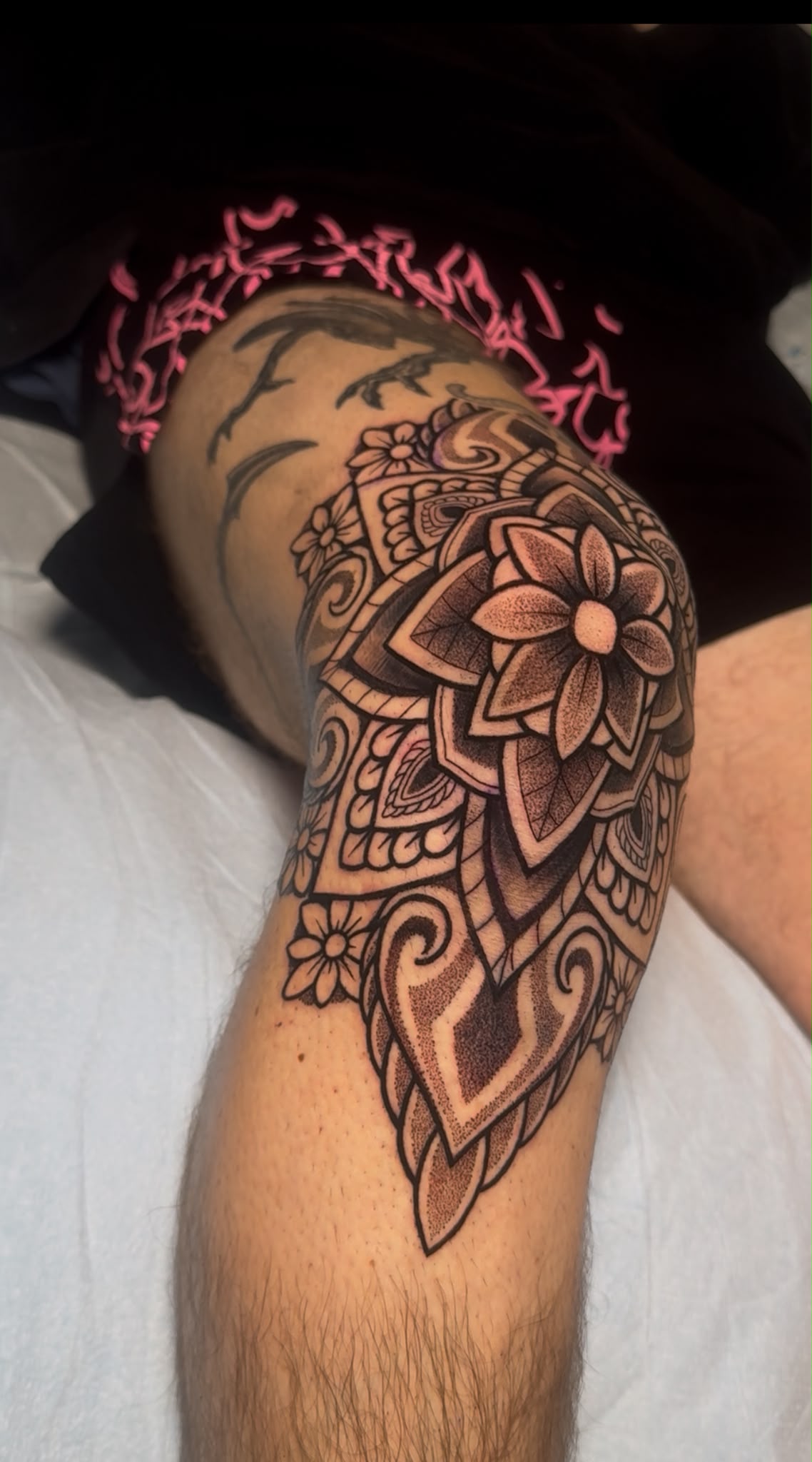
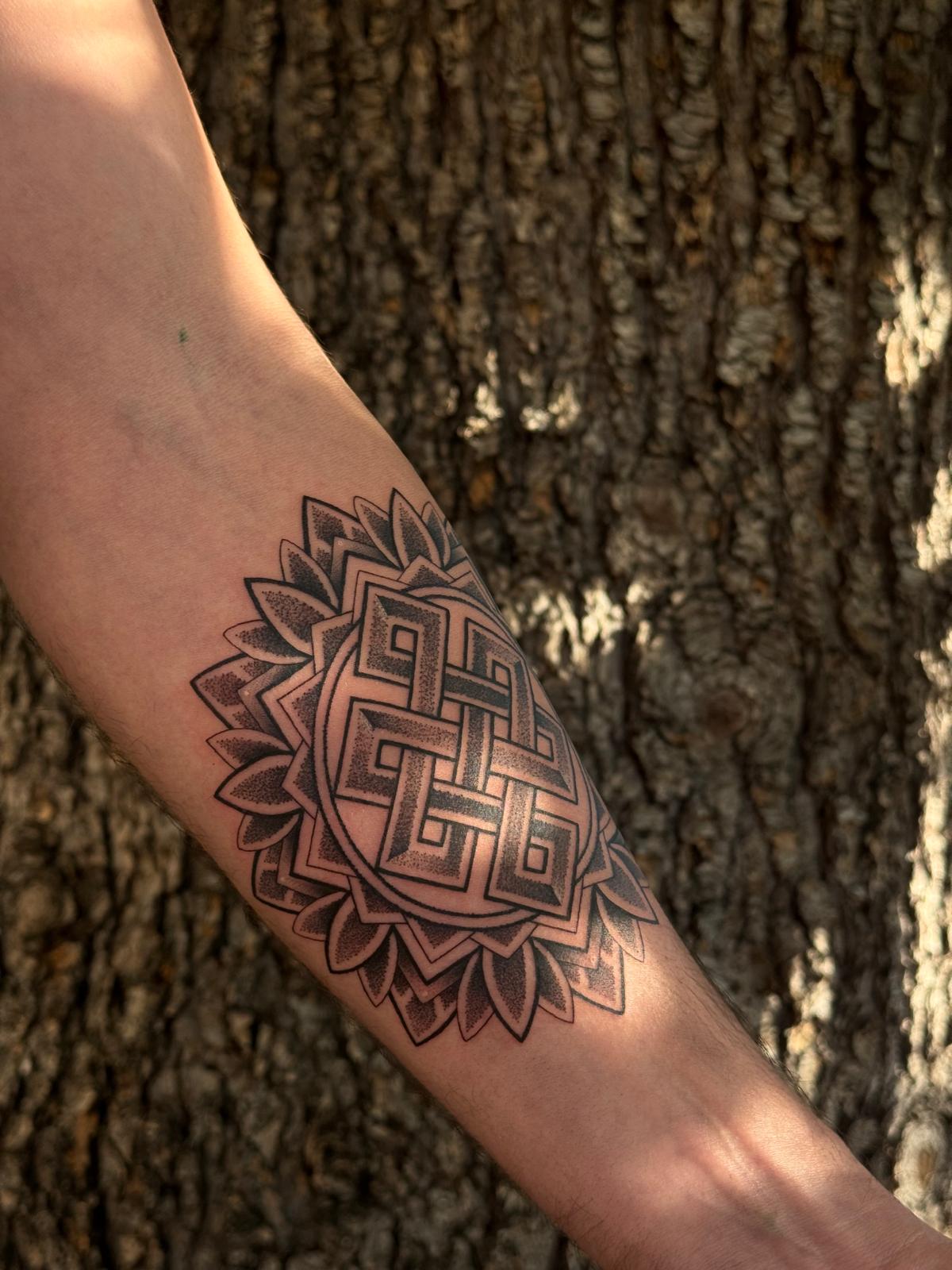
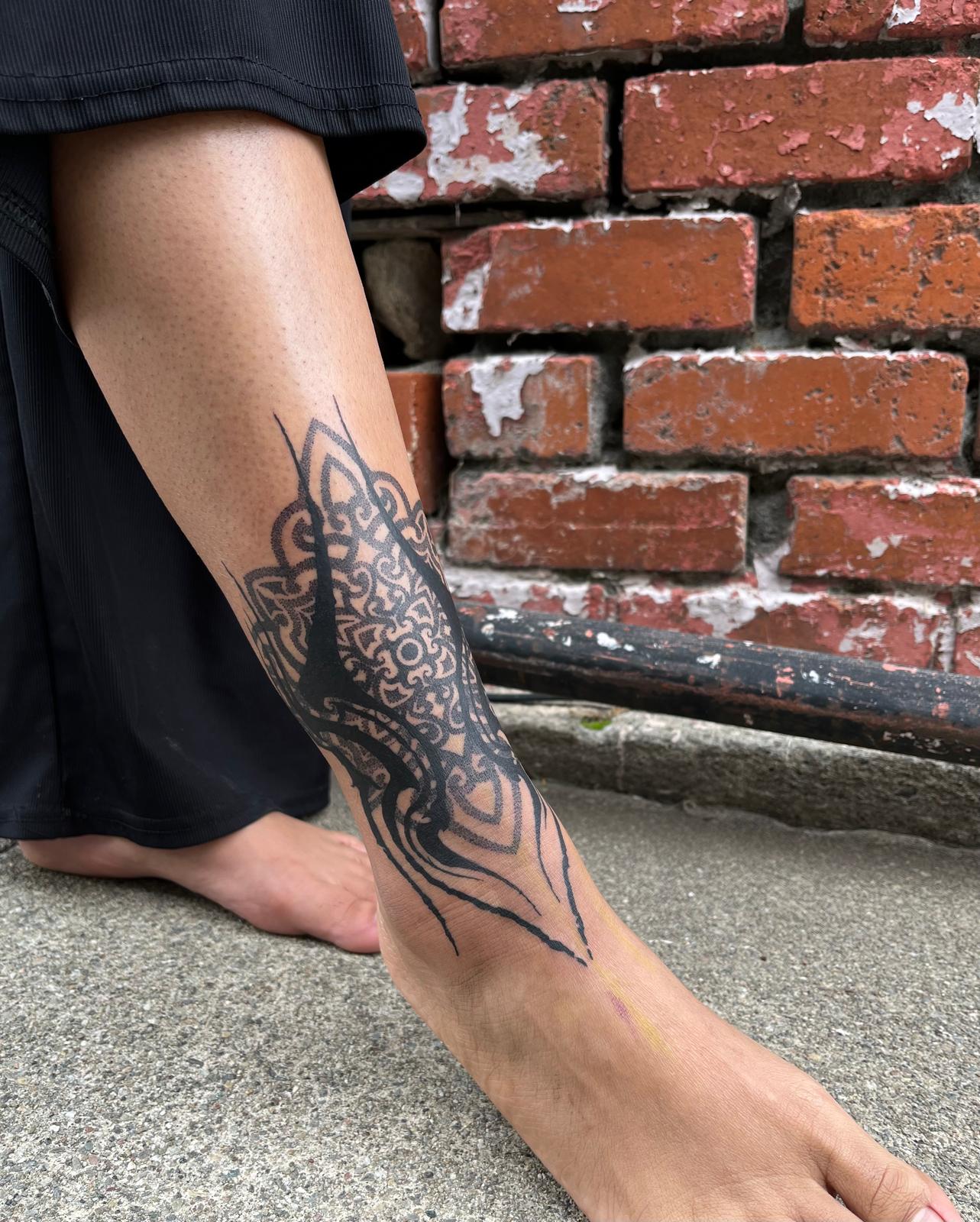
A showcase of intricate dotwork and stippled mandalas, meticulously crafted with geometric precision and sacred geometry motifs.


What is dotwork tattooing?
Dotwork builds tone from thousands of individually placed dots rather than continuous shading. Denser dots read darker, sparser dots lighter, and the transition between them is smoother than solid shading can achieve.
Why does dotwork cost more than a comparable shaded piece?
Time. The same area takes substantially longer to fill dot by dot than with continuous shading. You're paying for hours, not for a different ink or technique.
Does dotwork fade faster than solid shading?
No — dense dotwork ages well, because the structure lives in the pattern rather than in a single outline that can blur. Very fine, widely spaced stippling on high-friction placements is the exception.
How many sessions will my sleeve take?
A full dotwork sleeve typically runs 5 to 10 sessions across 5 to 12 months, with each session 3 to 6 hours. Smaller pieces are often one or two sessions.
Can dotwork be combined with linework?
Yes, and most of my work does exactly that — geometric linework holding the structure, dotwork providing the tone behind it.