

GEOMETRIC & MANDALA TATTOOS
THE PROCESS
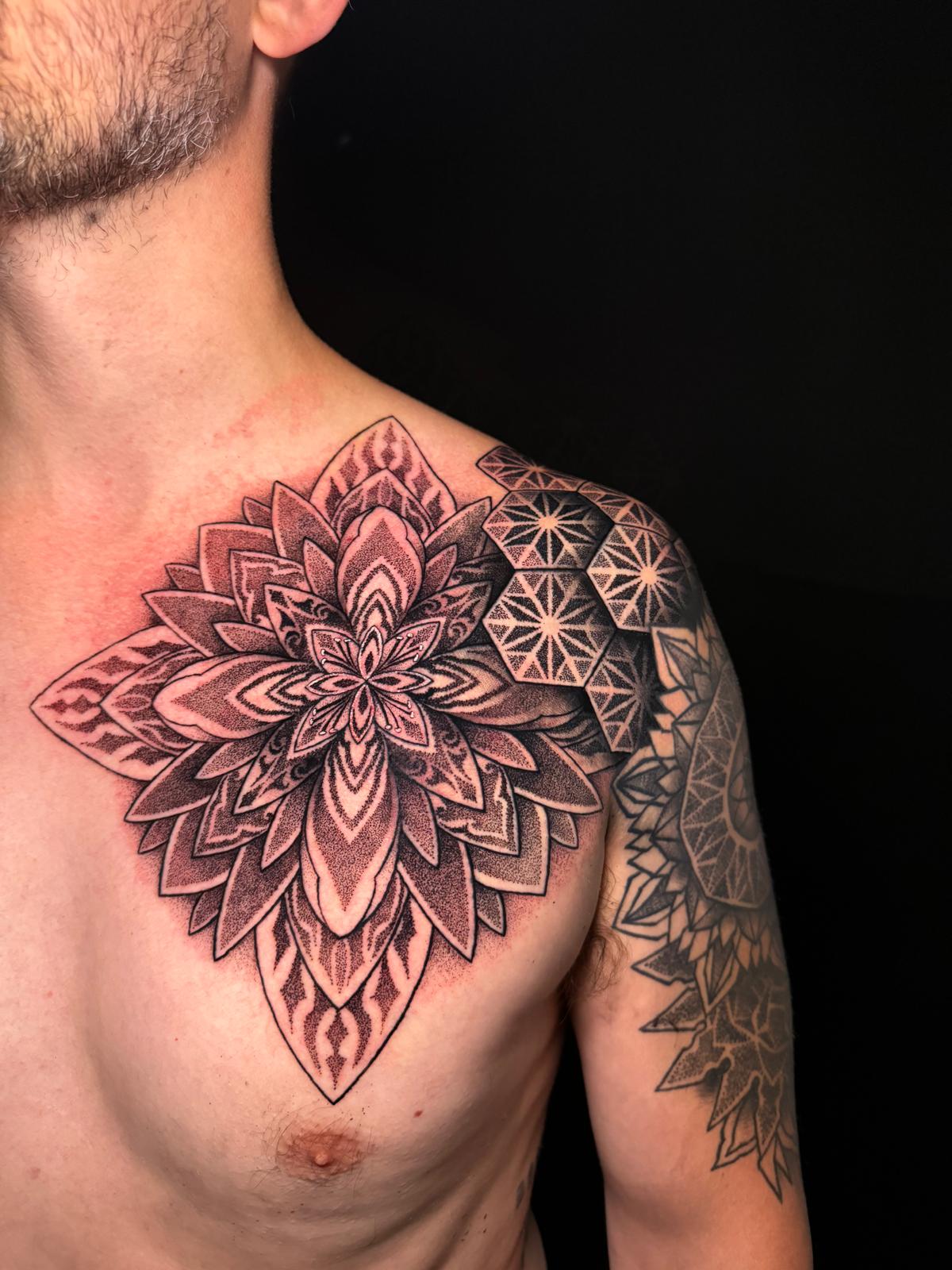
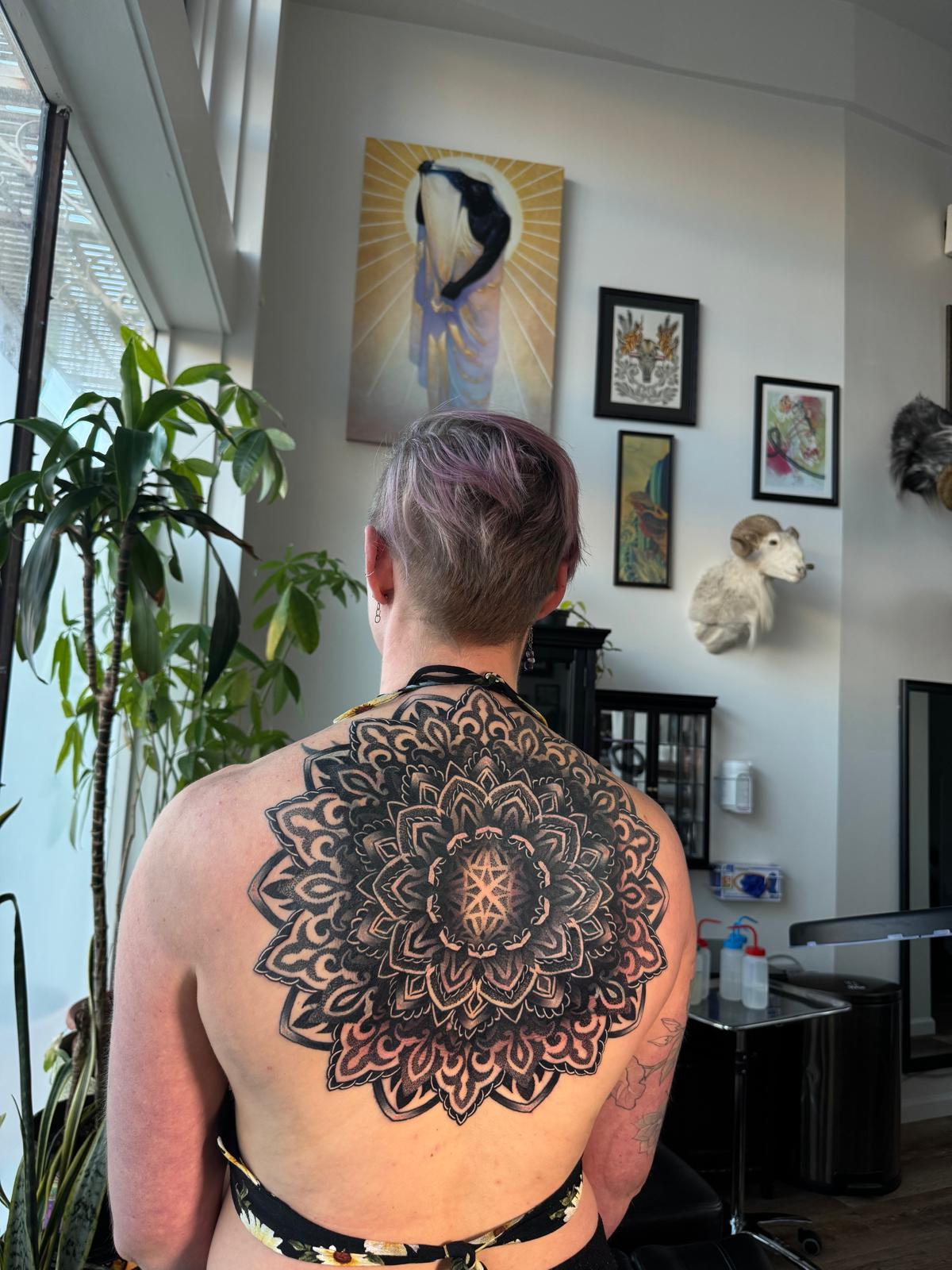
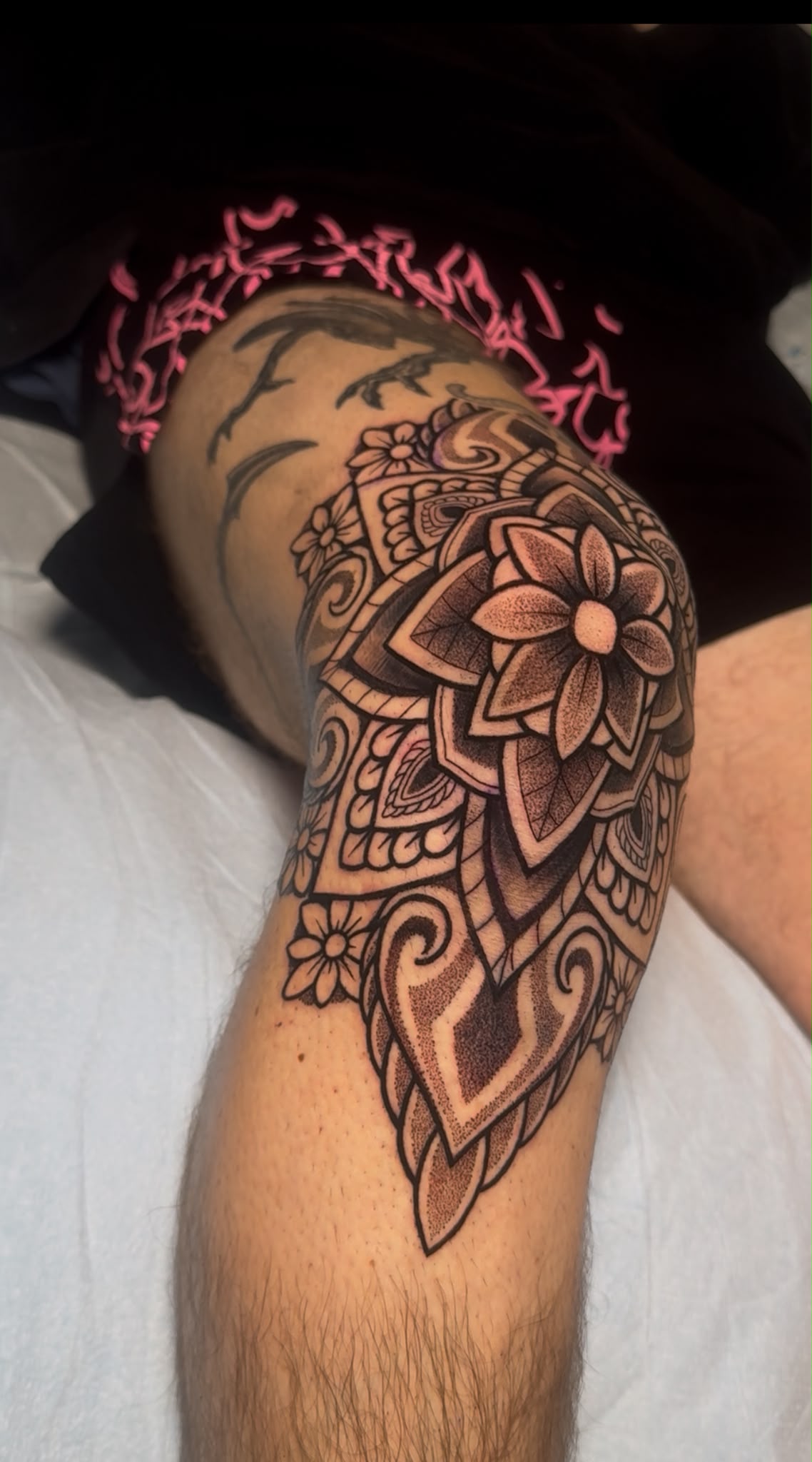
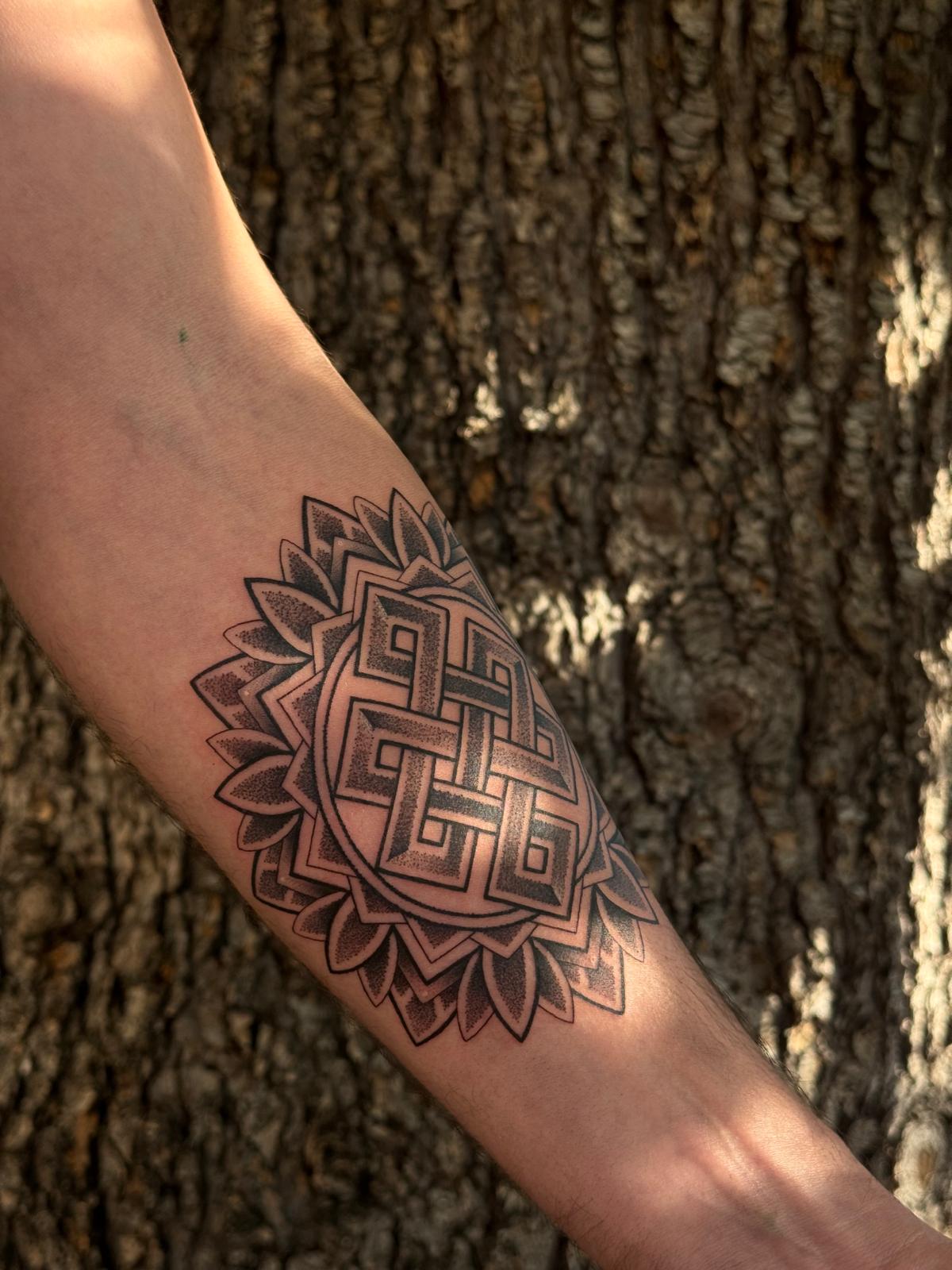
A mandala is a composition that radiates from a single centre, and everything about whether it works comes down to that centre being in the right place. On a chest it's the sternum; on a back it's the spine; on a knee or shoulder it's the point the joint rotates around. Get that right and the piece moves with the body. Get it wrong and it looks off in every photograph, even when the drawing is perfect.
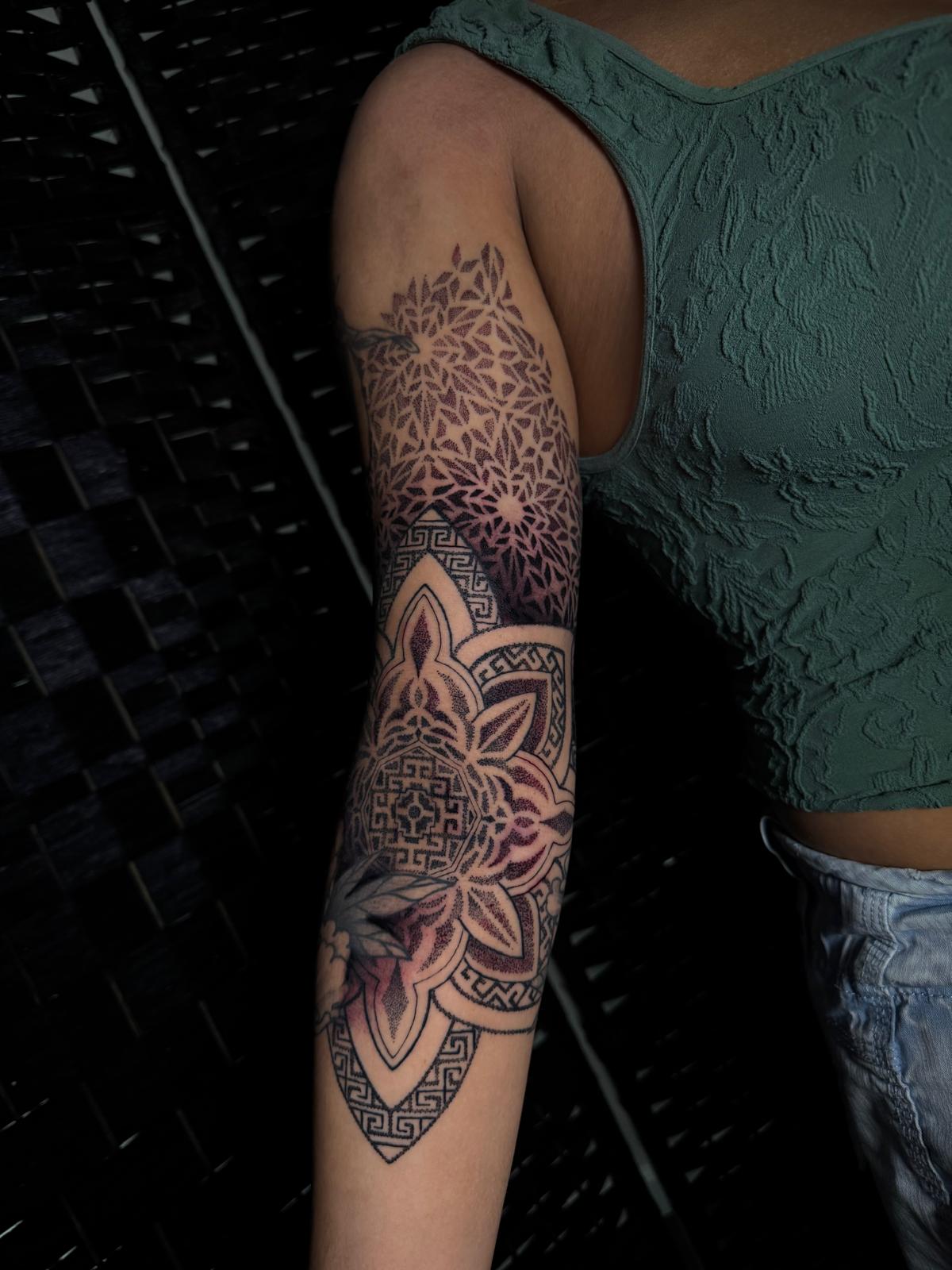
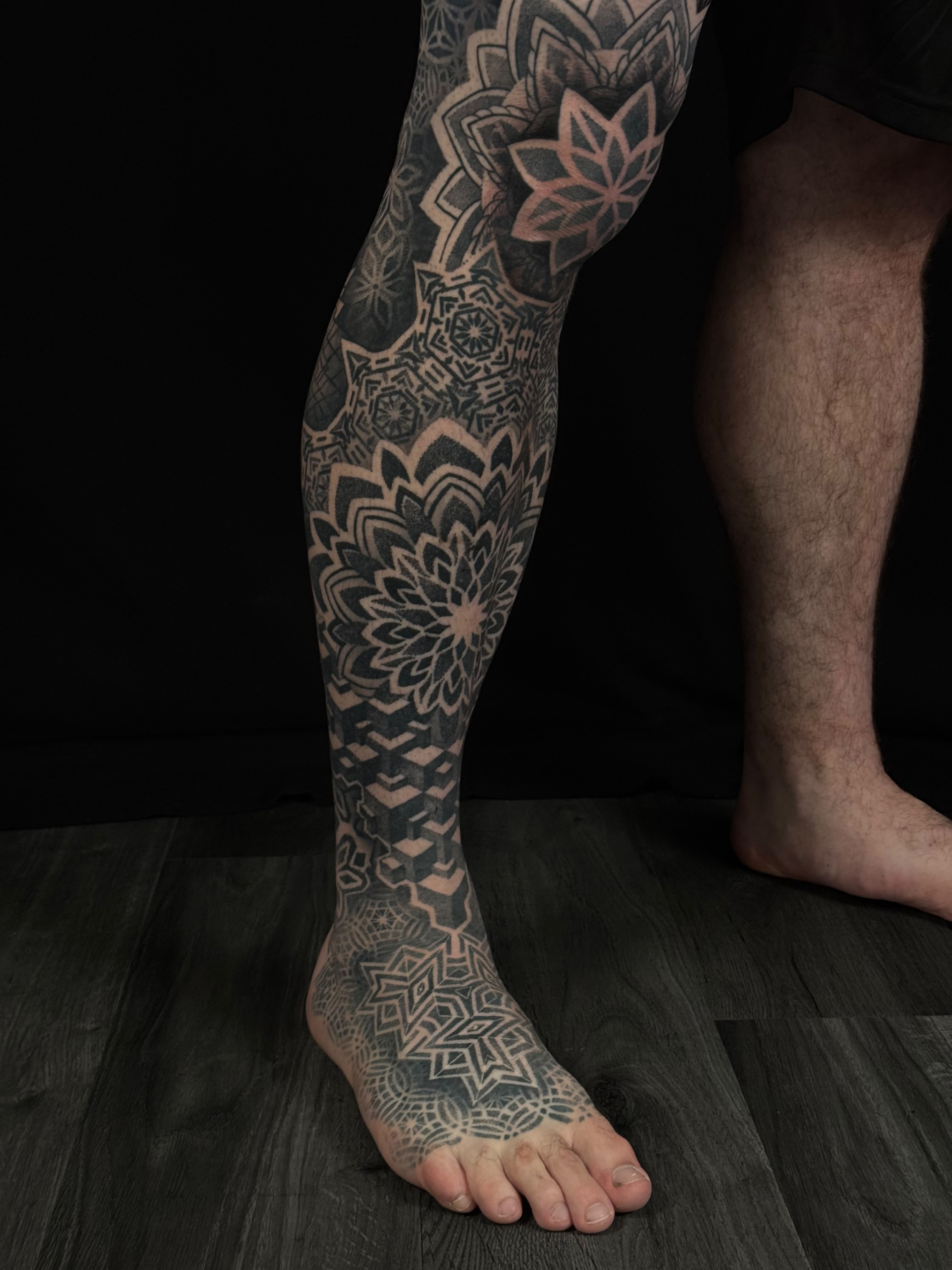
I build mandalas outward in layers — a geometric core, then petal rings, then ornamental edges that resolve into the surrounding skin rather than stopping at a hard border. Layers let a piece be extended later without redrawing what's already there, which matters if you're working toward a larger project over time.
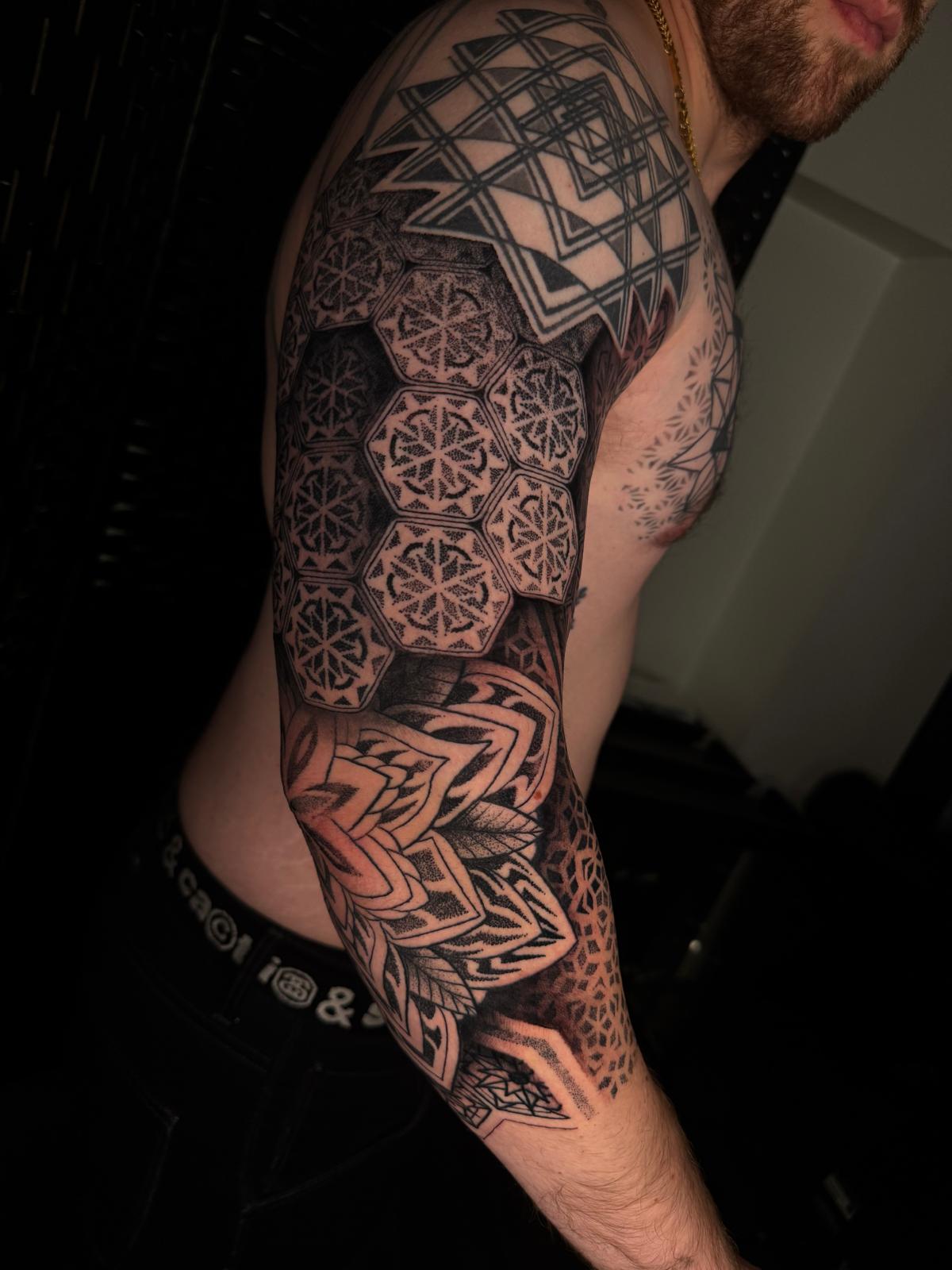
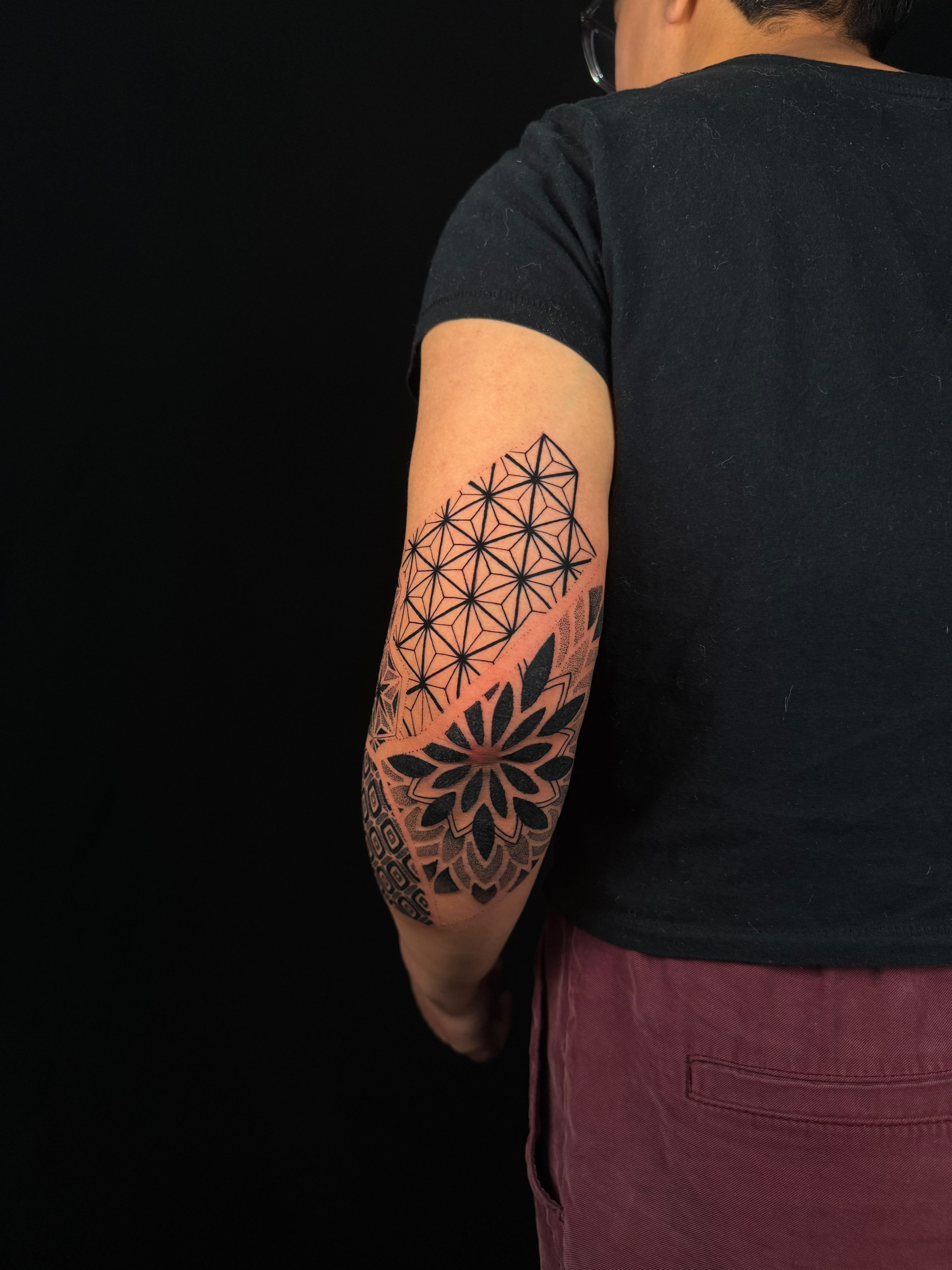
Geometric work that isn't mandala-based follows the same logic: tessellating tiles, hexagonal grids and repeating pattern fields all need an anchor point and a plan for how the pattern ends. The edges are the hard part, not the middle.
MANDALA PORTFOLIO


MANDALA FAQ
Technical specifications and placement guidelines for sacred geometry and stippled mandala tattoos.
01. PLACEMENT
Due to the technical precision required for stippled mandalas, placement is strictly limited to areas with high skin density and minimal movement. The neck, upper arms, and back are the most suitable locations for large-scale geometric compositions.
02. SIZE LIMITS
Large-scale dotwork sleeves are typically 5 to 10 sessions, 5 to 12 months. The size is determined by the density of the dots and the precision of the stippling technique, which requires significant time and space for healing.
03. SESSION LENGTH
A single session typically runs 3 to 6 hours. For full sleeves, multiple sessions are required due to the density of the technique. Each session focuses on building the intricate geometric patterns from the ground up.
04. HEALING
Due to the high density of dots, healing for large-scale dotwork takes significantly longer than traditional tattoos. The first 48 hours are critical for proper skin recovery and healing.
05. INQUIRIES
For inquiries regarding specific placement, size, or session length, please contact Eduar at Future Ink, 5251 Broadway, Oakland, CA. All inquiries are handled on a case-by-case basis.
Where do mandalas work best on the body?
Anywhere with a natural centre point: chest, upper back, shoulder cap, knee, outer thigh. The placement determines the composition more than the other way round.
Can I extend a mandala into a larger piece later?
Yes — I build them in layers with that in mind. A chest mandala can grow into a shoulder cap and sleeve without redrawing the original.
Do mandalas have to be symmetrical?
Radially symmetrical, usually — that's what makes them read as mandalas. But the outer edges are often deliberately asymmetric so the piece resolves into the body rather than sitting on it like a sticker.
How do you handle a mandala over a joint?
The centre goes on the axis the joint rotates around, and the outer layers are drawn to compress and stretch with movement. Knees and shoulders are among the best placements for this reason, not the worst.